Its antioxidant properties help achieve healthy, glowing skin and delay signs of aging.

Triphala is one of the most renowned and widely used Ayurvedic formulations. The name Triphala literally means “three fruits,” as it is a combination of three powerful medicinal plants — Amalaki (Emblica officinalis), Bibhitaki (Terminalia bellirica), and Haritaki (Terminalia chebula). This ancient herbal blend has been used for centuries for detoxification, rejuvenation, and maintaining overall health and longevity.
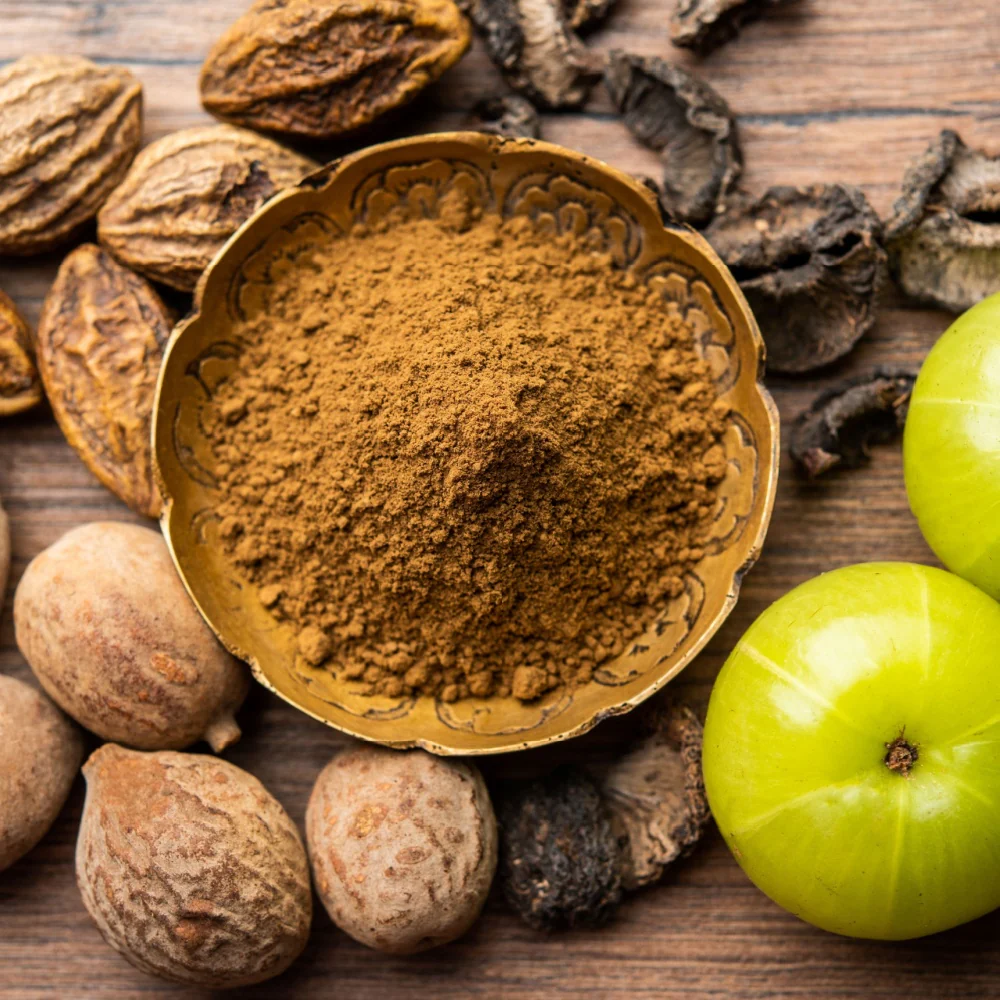
A powdered blend of three fruits that improves digestion, relieves constipation, and detoxifies the digestive system naturally.
Combines Triphala with Guggulu to reduce inflammation, aid weight loss, and treat joint pain effectively.
A boiled water extract that purifies blood, supports liver health, and improves skin and eye clarity.
Infused with ghee to nourish eyes, brain, and nerves while balancing Pitta dosha effectively.
Triphala enhances digestion, reduces constipation, and supports proper bowel movement naturally.
It helps eliminate toxins from the body, purifying blood and improving liver function.
Triphala strengthens the immune system and increases resistance against infections and diseases.
Regular use improves vision, reduces eye strain, and prevents common eye disorders.
Its antioxidant properties help achieve healthy, glowing skin and delay signs of aging.
Prolonged overuse can disturb electrolyte balance and gut flora.
Blood investigations help monitor liver enzymes, blood sugar, and lipid levels to ensure Triphala maintains internal biochemical stability.
Stool tests evaluate digestion efficiency, toxin elimination, and bowel regularity, reflecting Triphala’s cleansing and detoxifying effects on the gastrointestinal system.
Urine examination helps assess hydration, renal function, and toxin excretion, indicating Triphala’s influence on the body’s natural detox pathways.
This test ensures Triphala does not adversely affect liver enzymes and supports healthy detoxification and metabolic activity.
Evaluates creatinine and urea levels to confirm Triphala’s safe interaction with kidney functions and toxin filtration efficiency.
Regular blood pressure checks help track Triphala’s mild hypotensive effects, especially in patients prone to fluctuations in blood pressure.
This test monitors Triphala’s natural hypoglycemic effect, ensuring safe use among individuals with diabetes or glucose regulation concerns.
Copyright © 2025 – Designed by Camsol Advertising