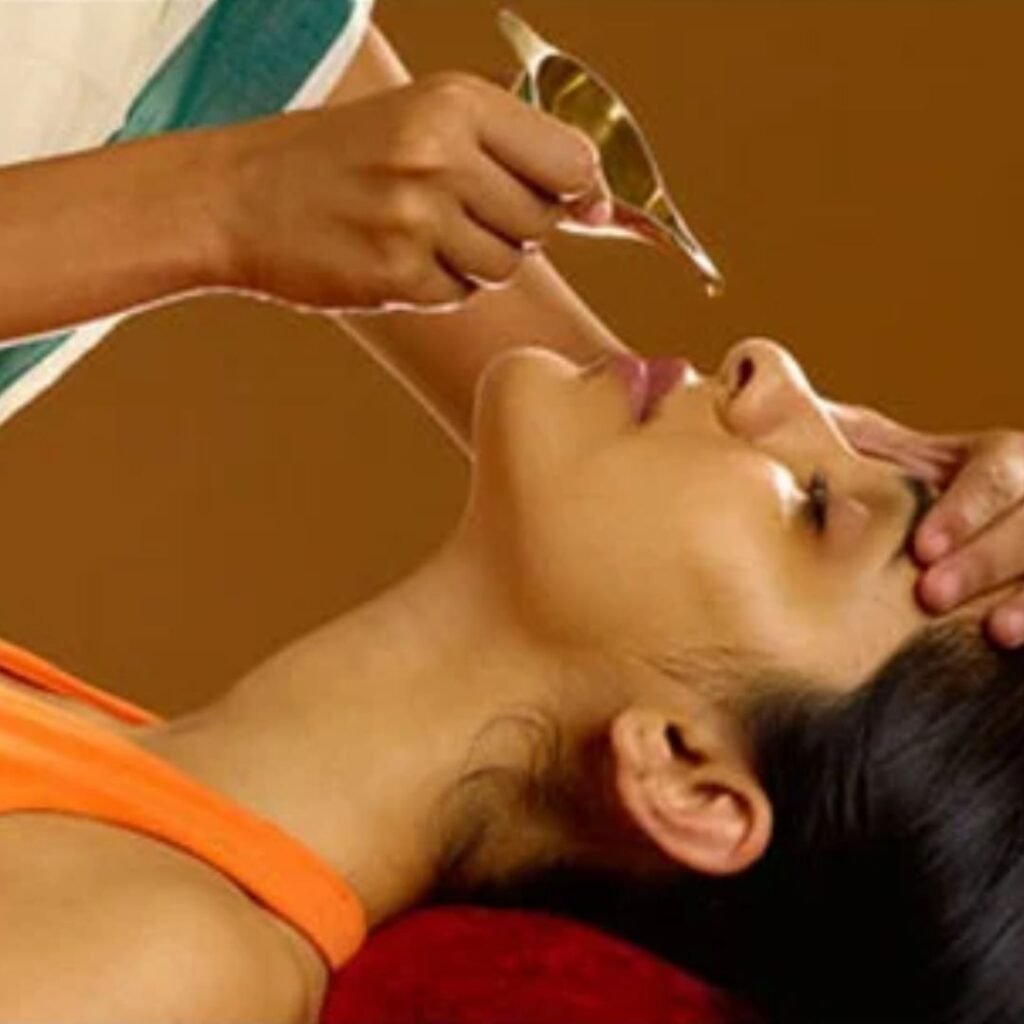
Nasya is a therapeutic procedure in which medicinal substances are administered through the nasal route. According to Ayurveda, the nose is the direct pathway to the brain and central nervous system. The therapy nourishes sensory organs, clears sinuses, improves memory, and enhances clarity of mind. It is one of the most effective treatments for diseases affecting the head, neck, eyes, ears, nose, and brain.
Nasya is recommended for conditions such as sinusitis, migraines, chronic headaches, allergies, facial paralysis, nasal congestion, hair fall, and mental stress. It not only detoxifies the region above the shoulders but also strengthens the sense organs and improves overall vitality.
Removes excess Kapha and toxins from the head and nasal passages using herbal oils or decoctions.
Administers ghee or medicated oils to nourish and strengthen tissues; beneficial for dryness and weakness.
Used for calming aggravated doshas and managing mild disorders with soothing herbs and oils.
Combination of cleansing and nourishing Nasya, depending on the patient’s dosha balance.
When nasal passages are blocked due to Kapha accumulation, Nasya helps clear the airways, improving breathing and overall respiratory comfort.
Excess toxins or mucus in the head region cause pressure and pain; Nasya therapy relieves congestion, restoring clarity and lightness.
Dry air or heat aggravates Vata and Pitta, causing irritation; Nasya lubricates and soothes nasal tissues, restoring natural moisture balance.
Toxin buildup or muscle tension around the neck is reduced through Nasya, improving flexibility and relieving stiffness in upper body regions.
When toxins obstruct sensory pathways, Nasya clears channels and nourishes nerves, enhancing smell, vision, and mental alertness effectively.
After oleation, mild steam therapy is applied to the face and forehead using herbal decoctions. This process opens up the nasal passages, dilates the pores, and enhances the permeability of the mucosal lining, allowing the medicinal oils to be absorbed effectively during Nasya.
The patient is made to lie down comfortably on the back with the head slightly tilted backward. A small pillow or rolled towel is placed under the neck to maintain the correct angle for medicine administration. This ensures that the medicated oil reaches the inner nasal cavity and sinus region efficiently.
The choice of medicine depends on the patient’s dosha imbalance and condition. Commonly used formulations include Anu Taila for Vata-Kapha balance, Shadbindu Taila for sinusitis and headache, and Brahmi Ghrita for stress, anxiety, and mental fatigue. Each preparation is carefully warmed to body temperature before use.
A few drops of the medicated oil or juice are instilled into each nostril with the help of a dropper or special Nasya instrument. The patient is instructed to inhale gently, allowing the medicine to reach deep nasal channels. This is followed by mild massage on the face and neck to enhance absorption and comfort.
After Nasya, the patient is advised to rest quietly for at least 10–15 minutes in a warm environment. They should avoid speaking loudly, sleeping immediately, or exposure to cold air, dust, and water. Light food and calm surroundings help the body assimilate the benefits of the therapy effectively.
Throughout the procedure, the patient’s response is observed—any excessive discharge, sneezing, or discomfort is carefully noted. The therapist ensures that the patient feels relaxed and the medicine acts gently without irritation.
Before Nasya, heavy or oily meals should be avoided, and after therapy, warm water or herbal tea can be taken. Regular practice of Nasya under supervision helps maintain sinus health, mental clarity, and balanced doshas.
Copyright © 2025 – Designed by Camsol Advertising